As architectural trends favor seamless indoor-outdoor transitions, frameless glass garage doors have gained popularity in luxury residential and commercial projects. However, a new technical advisory from bp Glass Garage Doors & Entry Systems warns that these systems may harbor critical structural vulnerabilities that could lead to safety hazards, code violations, and costly liabilities.
The advisory focuses on exterior frameless glass garage doors, which often rely on chemical adhesives, double-sided tapes, or caulking to bond heavy glass panels to hidden frames. Over time, exposure to thermal expansion, UV radiation, and environmental weathering degrades these chemical bonds, increasing the risk of panel detachment and building envelope failure. “Adhesive-bonded frameless glass doors present a liability for commercial spaces and homeowners alike,” said Rob Reyes, General Manager of bp Glass Garage Doors. “In an overhead application, relying on glue to support heavy glass panels over years of operation poses real dangers. Structural integrity must never be sacrificed for temporary visual trends.”
Beyond safety, the advisory outlines design limitations. To hide interior framing, frameless systems often require dark gray or mirrored glass tinting, which can compromise the desired aesthetic. Moreover, adhesive configurations typically lack verified thermal breaks and independent testing, failing to meet energy codes like California Title 24 or NFRC requirements for habitable spaces.
In coastal regions, especially High-Velocity Hurricane Zones (HVHZ) such as Miami-Dade and Broward counties, the risks are amplified. Extreme heat, humidity, and salt air accelerate adhesive degradation. Additionally, frameless systems offer zero wind-load and large missile impact resistance, making them prone to blowout during storms. These systems often lack Florida Product Approval (FPA) and Miami-Dade County Notice of Acceptance (NOA), which can lead to permit rejections, failed audits, and denied insurance claims.
“Adhesive-bonded frameless glass doors present an unmitigated liability for commercial spaces and homeowners, particularly in hurricane-prone coastal regions like Florida,” Reyes added. “In high-wind environments, relying on glue to hold heavy glass panels overhead is a severe hazard. True storm protection requires a high structural performance system that is mechanically anchored and impact-tested.”
Serviceability is another concern. Proprietary or unverified hardware configurations can make replacing damaged glass difficult, leaving property owners without standard maintenance options.
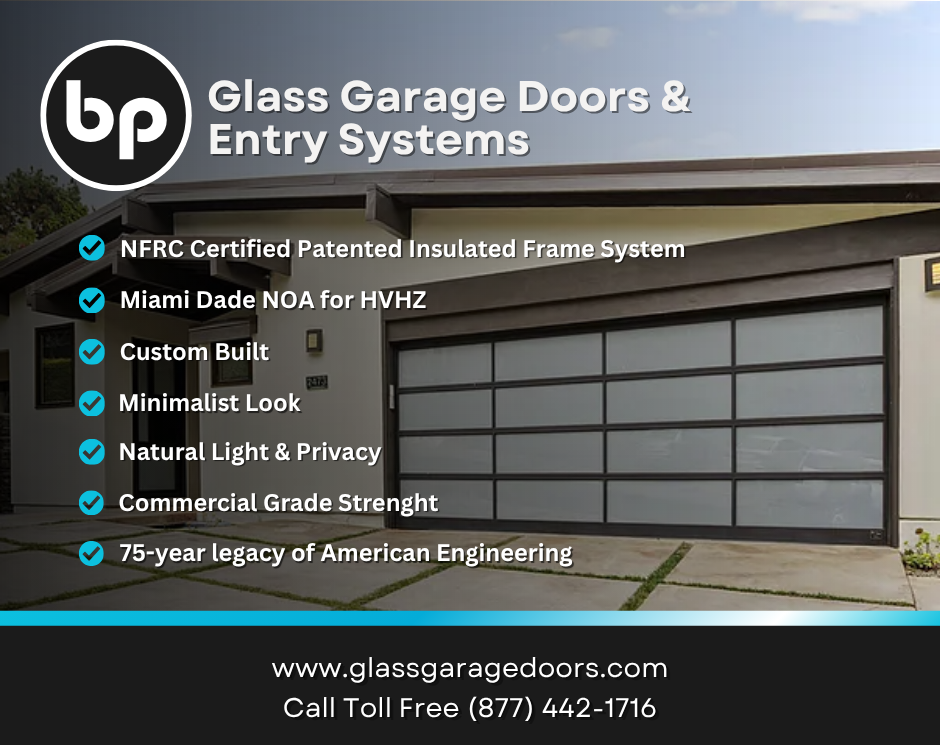
In response to these challenges, bp Glass Garage Doors promotes its architectural frame alternative, which features narrow frames without compromising safety. The company’s systems mechanically secure glass panels within custom frames and are independently tested and NFRC certified. They are approved for various live/work environments, including restaurants, offices, educational spaces, and residences.
For more information, visit bp Glass Garage Doors.