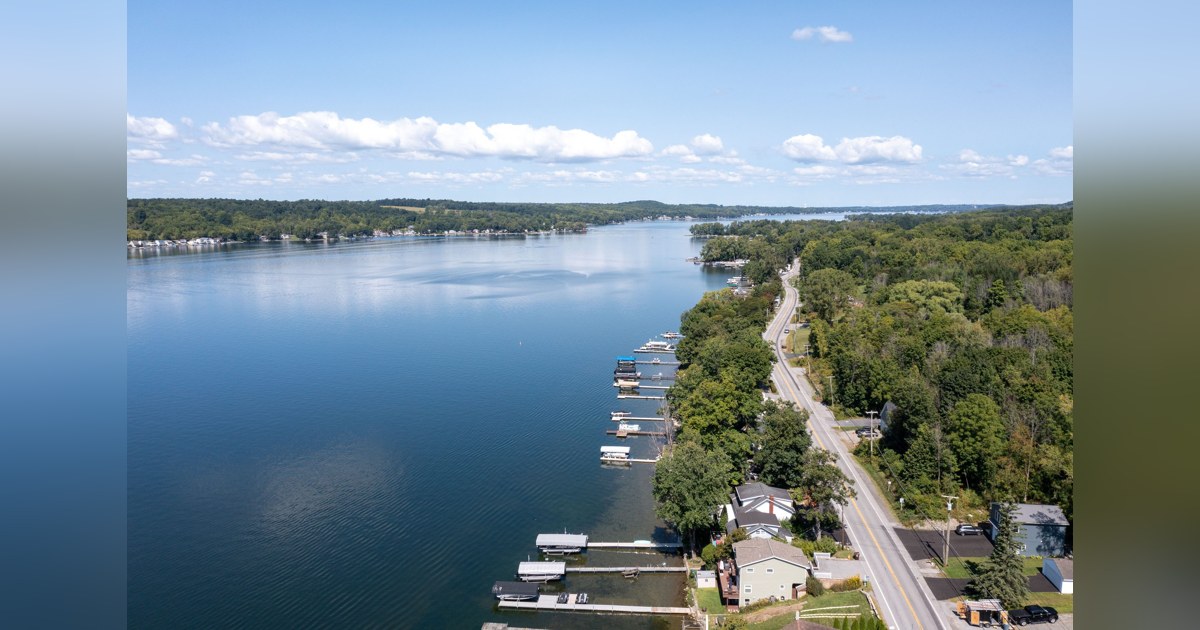
A recent 90-day review of Conesus Lake waterfront activity reveals that 15 properties closed for a combined total approaching $13 million, with a median sale price around $800,000 and roughly 80 percent of transactions landing between $550,000 and just under $1 million. But according to Matthew Sharman, team leader of The Sharman Team at Real Broker NY LLC, the price tag is only the beginning. The gap between the excitement of buying a lake house and the reality of owning one is where most buyer regret originates—not in overpaying at closing, but in failing to price what ownership actually costs across the years that follow.
Sharman, who specializes in the Conesus Lake waterfront market, cautions against over-relying on the $800,000 median as a benchmark for all properties. “$800,000 is a useful reference point, but it can’t be applied across the board,” he says. The reason is structural: suburban housing stock supports algorithmic valuation because it is uniform, but a lake does not work that way. “The lake is its own animal,” Sharman says. Radius comps fail because the properties inside the radius are not comparable to one another. What substitutes for them is a sliding-scale adjustment across variables that actually differentiate one lake property from the next—usable frontage, slope and access to the water, water depth, shoreline stabilization, parking, easements and rights-of-way, and the condition of septic and water systems.
Sharman’s position is that a waterfront property valued without a physical inspection is a property valued on incomplete information. “A lake address is always going to get attention, but the property still has to earn that price,” he says. He advises buyers to understand three categories before committing: purchase costs, annual carrying costs, and larger replacements likely to arrive later. The carrying list is longer than most first-time lake buyers anticipate—financing and closing costs, taxes, insurance and utilities, seasonal dock installation and removal, shoreline maintenance, and more. Insurance warrants particular attention, especially flood coverage, which should be quoted before going under contract.
Within the physical characteristics, Sharman identifies one that buyers consistently misread: frontage. “Fifty feet of lake frontage doesn’t automatically mean fifty feet of usable waterfront,” he says. “I’ve seen modest frontage that gives a family a fantastic lake life, and more frontage that comes with real problems. What matters is how you can actually use it.” The questions he puts to buyers are concrete: Can you comfortably reach the water? Does the depth suit the boat you intend to keep? Is the shoreline in sound condition? Does the dock configuration match how you plan to use the property? Dock quality moves value in a way that rarely gets stated outright, particularly at the upper end.
Where buyers get into difficulty, in Sharman’s account, is not in the known costs but in the assumed ones. “The most expensive mistakes on the lake usually aren’t inside the house,” Sharman says. “They’re at the shoreline, underground, or in the paperwork that says how the property can legally be accessed and used.” The pattern is consistent: a buyer falls for the view, then assigns every unresolved item an imaginary and conveniently low price—the shoreline will get fixed, the dock will get replaced, the space will get added—without testing those estimates against a contractor, a permit office, or a budget.
Sharman’s practice is to convert assumptions into scope before they become part of an offer: a realistic estimate, a contractor’s input, confirmation of what is actually permitted. Shoreline work in particular can require permits, sometimes transferable and sometimes not, and generally requires specialized construction rather than general contracting. Some of this falls outside what a standard home inspection covers. Breakwall condition is the clearest example—assessing remaining life and replacement cost is a mason’s work rather than an inspector’s. Sewage ejection systems are another, common on these lakes because many houses sit below grade and have to pump upward, and are worth a plumber’s eye.
Before comparing asking prices, buyers should verify the permitting, condition, and transferability of docks and breakwaters, the age and capacity of the septic system, insurance requirements, and seasonal maintenance. For a buyer weighing a waterfront purchase, the useful discipline is to price the property as it will be owned rather than as it will be bought. “The goal isn’t to buy the cheapest house on the lake,” Sharman says. “It’s to know exactly what you’re getting for your money before you sign.”