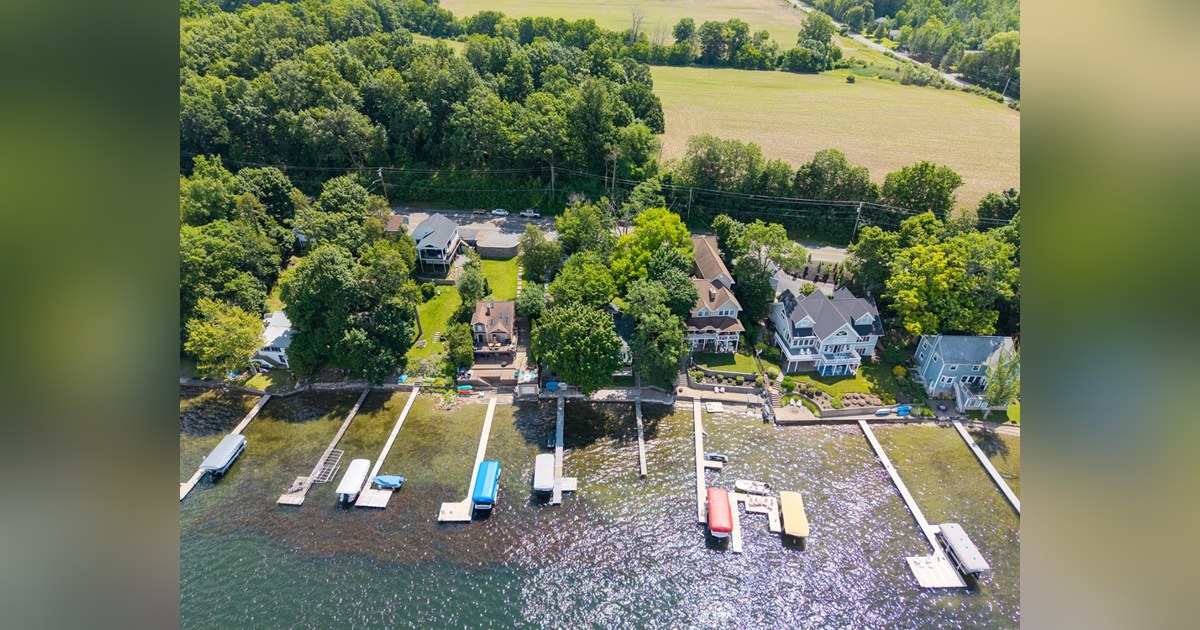
On Conesus Lake, the annual ritual of dock removal and boat winterization is governed not by a fixed calendar date but by the unpredictable onset of winter. According to Matthew Sharman, team leader of The Sharman Team at Real Broker NY LLC, owners who wait for a specific date often find themselves caught by sudden cold. "Winter comes unannounced often, and it stays," he says. The practical planning window runs through September and October, as indicated by New York State Parks, which lists the docks at the Conesus Lake Boat Launch as available from late April through October 15. This public reference point, while not a rule for private owners, signals how the season is generally timed on the lake.
Sharman advises working backwards from the last realistic use of the boat rather than forwards from the weather forecast. By October, the margin for scheduling removal narrows considerably. The risk is not only a cold snap but also a scheduling crunch: companies that pull docks compress most of their work into a few weeks, and late callers compete with every other owner who delayed. "You're not trying to win a contest for the last dock in the lake," Sharman says. Most owners hire out the removal, but for those handling it themselves, Sharman recommends documenting the system before disassembly—photographing it in place, labeling sections, and even recording video. "Future me will remember where this goes—that's not a system," he notes. Removal is also the ideal time to inspect and clean the underside of the dock, and to consolidate hardware for storage.
Storage is a critical factor that buyers often overlook. Some properties have space to stack dock sections; others must transport them off-site, turning storage into an annual expense. Sharman suggests establishing storage arrangements during the purchase process rather than discovering the need the following autumn. Material choice also affects workload: aluminum, though more expensive upfront, requires less maintenance than wood, which needs regular painting and board replacement. Permanent installations are uncommon on Conesus, Honeoye, and Silver Lake, unlike the deeper lakes to the east where boathouses and fixed docking systems are typical.
Beyond the dock, other winterization tasks include treating fuel, checking fluids, and clearing water from systems prone to freezing. Lifts and canopies need inspection and drying, and items like ladders, furniture, and water toys must be stored. Sharman recommends hiring contractors for electrical and water winterization if there is any doubt, as failures can be costly and hidden until spring. He also emphasizes the value of a written checklist with a named responsible party for each task, and completing repairs in late autumn to avoid spring queues.
Dock maintenance is not about adding dollar-for-dollar value but about protecting the property's overall appeal. "The dock is your gateway to what everyone's paying for, which is the lake," Sharman says. A neglected dock can disproportionately affect a buyer's perception, while a well-maintained one suggests a cared-for home. For those buying into a waterfront property this autumn, Sharman advises clarifying dock removal and installation responsibilities, storage locations, and which equipment conveys with the sale. Docks usually transfer, but hoists often do not, and unwritten assumptions can lead to unexpected costs.