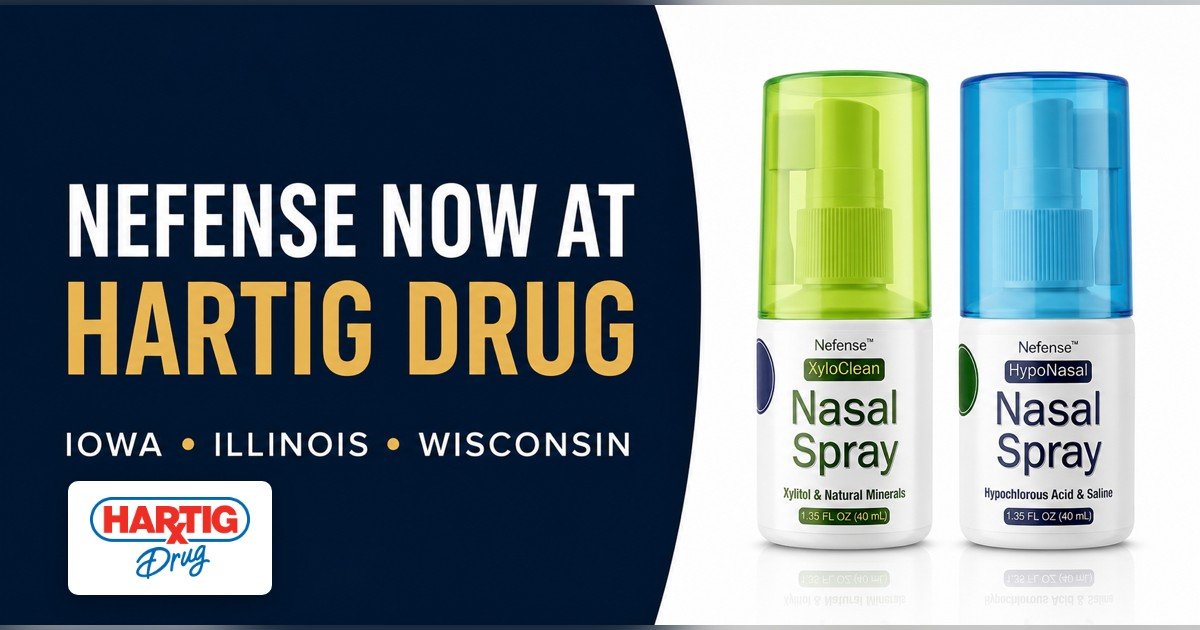
Hartig Drug Company, a family-owned pharmacy and retail company based in Dubuque, Iowa, has announced the addition of Nefense nasal care products to its shelves at select locations in Iowa, Illinois, and Wisconsin. The move provides customers with new drug-free options for daily nasal hygiene, according to a press release distributed by Reportable, Inc.
The Nefense lineup includes hypochlorous acid nasal sprays designed for adults, children, and infants, as well as a xylitol spray. These products are non-medicated alternatives to traditional decongestants, offering a range of choices for different age groups. The introduction of these products comes as consumers increasingly seek over-the-counter remedies that avoid active pharmaceutical ingredients.
Published randomized clinical research has evaluated low-concentration hypochlorous acid nasal irrigation for chronic sinonasal symptoms and allergic rhinitis. However, the press release notes that these studies do not test Nefense-branded products themselves. This distinction is important for consumers who are considering the efficacy of such products based on scientific literature.
The availability of Nefense products at Hartig Drug locations aligns with the company's focus on providing health, wellness, and everyday consumer products while maintaining personalized service and strong local community relationships. Hartig Drug has served communities throughout Iowa, Illinois, and Wisconsin since its founding in 1904.
Nefense, also based in Dubuque, Iowa, is a nasal wellness company focused on daily nasal hygiene, airway care, and better breathing. Developed under the direction of Richard Downs, DDS, the portfolio includes HypoNasal, HypoNasal Junior, HypoBaby, and XyloClean, with formulations based on hypochlorous acid and xylitol. More information about Nefense can be found at nefense.com.
The addition of Nefense products represents a strategic expansion for Hartig Drug, catering to a growing market for drug-free nasal care solutions. With respiratory health remaining a priority for many consumers, the availability of these products in local pharmacies could offer a convenient alternative to medicated sprays. The move also underscores a trend toward preventive health measures and daily hygiene practices that do not rely on pharmacological interventions.
For customers in the affected regions, this means more choices when addressing nasal congestion, allergies, or routine nasal cleansing. As always, individuals should consult with healthcare professionals to determine the most appropriate products for their specific needs.