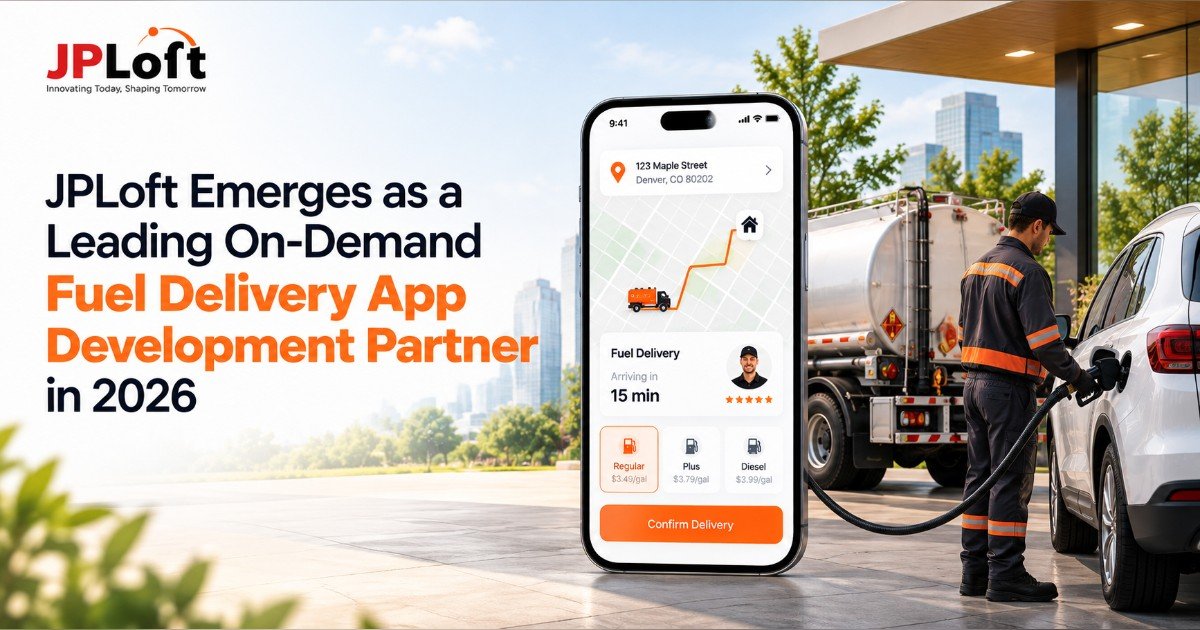
The on-demand economy continues to reshape how essential services are accessed, and fuel delivery is emerging as a significant segment. As businesses and consumers seek greater convenience, digital platforms that enable fuel ordering and delivery are becoming critical. JPLoft, a global software development company, is positioning itself as a trusted technology partner for building these platforms, according to a recent press release. The company's expertise in mobile app development, real-time tracking, payment integration, and operational tools is aimed at helping fuel businesses meet changing customer expectations.
The shift toward on-demand fuel delivery is driven by the needs of individuals, fleet operators, and commercial businesses that require fuel at specific locations and times. Traditional methods often involve manual requests and limited tracking, which can be inefficient for managing vehicle fleets, construction equipment, agricultural machinery, and generators. Digital fuel delivery apps consolidate these activities into a single system where customers can schedule deliveries, track orders, select fuel types, and receive updates. For businesses, this means improved visibility over orders, payments, inventory, and daily operations. Use cases range from emergency fuel delivery to scheduled fleet refueling and doorstep services, offering more flexible and responsive service options.
JPLoft's approach to fuel delivery app development encompasses product strategy, UI/UX design, mobile development, backend engineering, and third-party integrations. A typical platform may include customer apps, driver apps, an admin dashboard, and business management tools. Customer-facing features can include fuel type and quantity selection, delivery address management, scheduled and urgent requests, real-time tracking, digital payments, order history, push notifications, and customer support. Driver-facing tools enable viewing assigned orders, navigation, updating delivery progress, and confirming completions. Admin dashboards support order management, driver allocation, pricing rules, service areas, payment tracking, and performance reports. By integrating these functions, businesses can create a more organized delivery process and enhance the customer experience.
Beyond basic ordering, successful fuel delivery apps require robust operational tools. As an experienced fuel delivery app development company, JPLoft develops solutions that connect with mapping services, payment gateways, notification systems, fuel inventory tools, and other business software. These integrations reduce manual work and give operators better control. Location-based services help assign deliveries based on service areas and driver availability, while GPS tracking provides customers with updates and route planning supports efficient dispatch. For commercial clients, platforms may include recurring orders, account-based billing, multiple delivery locations, and usage reports, making the app more useful for fleet managers and organizations with regular fuel needs.
On-demand fuel delivery serves diverse business models, from fuel stations and independent suppliers to fleet service providers and energy companies. JPLoft works with businesses to define features based on their service model, target customers, operating regions, and growth plans. A startup might begin with a customer app, driver app, and basic admin panel, while an established supplier may need advanced dashboards, business accounts, recurring delivery options, and integration with existing systems. This flexible approach allows companies to focus on features that matter most without unnecessary complexity. User experience is also a priority, as fuel delivery apps must be simple to use during time-sensitive situations. JPLoft emphasizes intuitive interfaces, clear order flows, and smooth communication to help users request fuel, track progress, and complete payments without friction.
As fuel delivery services expand, businesses need platforms that can scale with more customers, vehicles, locations, and transactions. JPLoft's software development capabilities enable businesses to plan platforms that can be improved over time, adding new features, integrations, service areas, and customer segments as needs change. The company also supports emerging technologies such as AI-based customer support, predictive demand insights, automated dispatch assistance, and data-driven reporting, which can help fuel delivery companies use operational data to improve service. With mobile apps becoming a key channel for connecting customers, suppliers, drivers, and business teams, JPLoft's focus on building mobile, web, and custom software solutions positions it to help companies turn service ideas into practical digital platforms and capitalize on the evolving fuel delivery market.