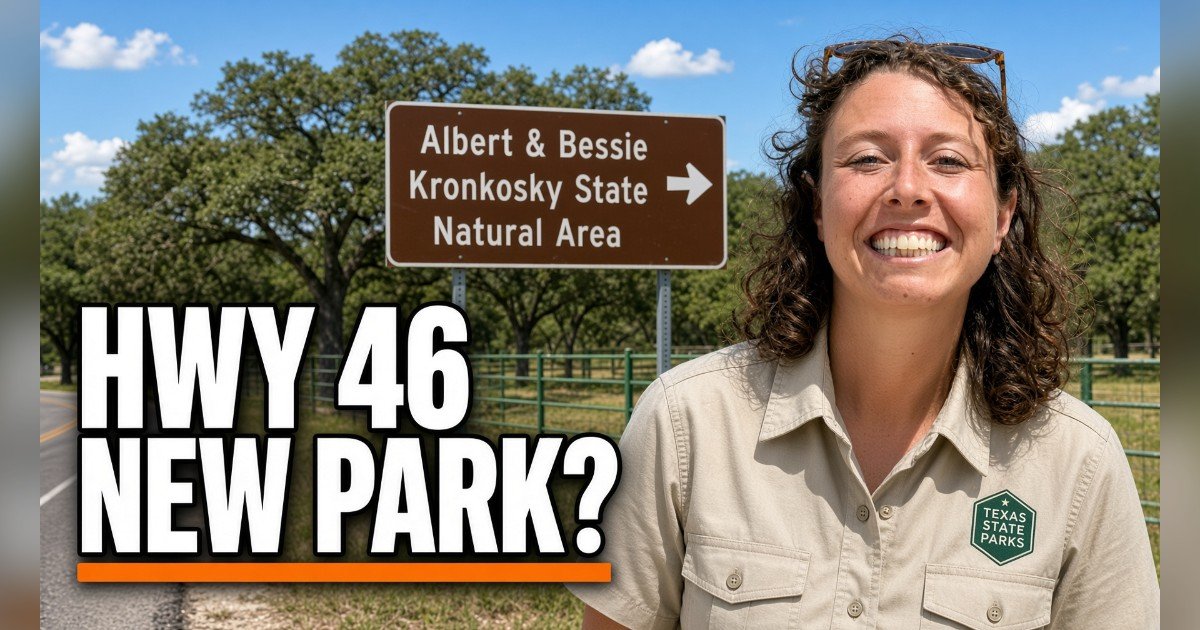
The Albert & Bessie Kronkosky State Natural Area (ABK), a 3,814-acre tract spanning Bandera and Kendall counties along Highway 46, is on track to open to the public in late fall 2026, according to site superintendent Stephanie Kwiatkowski. In a recent episode of New Texas State Park Near Boerne: Why It Isn't a Park | ABK, Kwiatkowski explained why the site is classified as a state natural area rather than a state park—a distinction with significant implications for how the land will be managed and experienced.
The difference is not merely semantic. Under the Texas Administrative Code, state natural areas prioritize conservation over recreation, while state parks are designed primarily for recreational use. Kwiatkowski described the classification as a spectrum between recreation and conservation, noting that ABK's fragile ecosystems—including bigtooth maples that rival those at Lost Maples State Natural Area and riparian corridors along Red Bluff Creek and Pipe Creek—warrant a protective approach. The site owns both sides of the canyons, she said, safeguarding the viewshed "forever." That protection matters because the property sits in a rapidly developing region between Boerne and Bandera, where conservation easements and public ownership are increasingly rare.
Despite the conservation focus, visitors will still find substantial recreational opportunities. ABK will offer 28 miles of multi-use trails open to hikers, mountain bikers, joggers, and strollers, along with cabins, screened shelters, tent sites, backcountry camping, and hike-and-bike infrastructure. Construction crews and a six-person site team are preparing these amenities for public access. The mix reflects a deliberate balance: enough access to foster appreciation for the land, but not so much that it compromises the resource.
Operational lessons are also shaping preparations. A July 2026 flooding event washed out landscaping, trails, and campsites before any public visitation, underscoring the challenges of building in a flood-prone landscape. Kwiatkowski credited the volunteer corps assembled by founding superintendent James Rice, a former biologist, as "integral to our success as a site." That volunteer network, built over years of planning, will likely be essential as the site transitions to public use.
Kwiatkowski's own path—from childhood camping trips to a seasonal job with New Braunfels parks, a park operations trainee role at the Lost Pines Complex, and an assistant superintendent stint at Pedernales Falls State Park—reflects the kind of hands-on experience Texas Parks and Wildlife is relying on to open ABK smoothly. Her June promotion came after the agency hosted Rice on The Building Texas Show while the land was still in survey and planning, making this episode a return visit that tracks the project's progress.
The implications extend beyond one park. ABK's opening will test whether Texas can expand public access to natural landscapes without sacrificing the ecological values that make those landscapes worth visiting. For a state grappling with population growth and habitat fragmentation, the Kronkosky Natural Area offers a model—and a warning—about what it takes to safeguard a viewshed for generations.