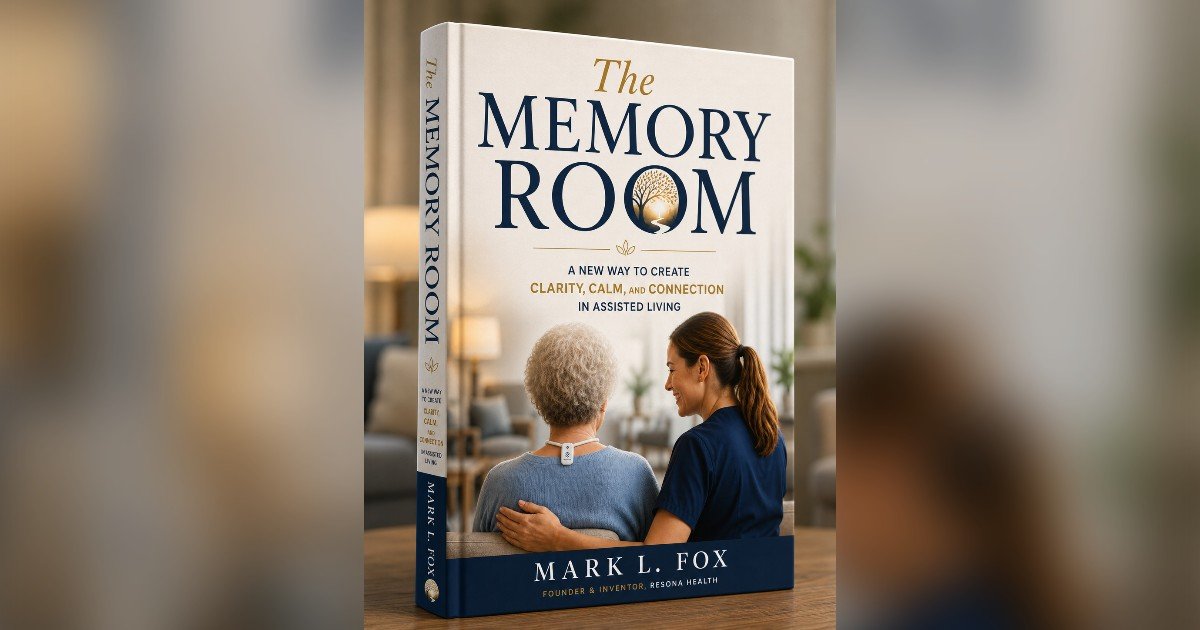
A new book is challenging one of memory care's most deeply held assumptions: that little can be done beyond managing symptoms for the more than 55 million people worldwide living with dementia. Mark L. Fox, founder of Resona Health and former aerospace engineer, has released The Memory Room: A New Way to Create Clarity, Calm, and Connection in Assisted Living, a groundbreaking exploration of the science behind cognitive variability and emerging non-pharmacological approaches.
Drawing on research from MIT's Picower Institute for Learning and Memory and clinical findings from a completed Phase 1 study, Fox presents a compelling case that the "good days" caregivers observe are not random events but may reflect measurable changes in neural function that can potentially be supported through safe, non-invasive interventions. The book examines the rapidly expanding field of 40 Hz gamma stimulation, which gained international attention following MIT studies demonstrating that stimulation at 40 cycles per second may influence biological processes associated with brain health, including microglial activation and neural network coordination.
At the center of the discussion is BlueVibe, a wearable device developed by Resona Health that combines pulsed electromagnetic field (PEMF) technology and pulsed blue light stimulation at 40 Hz. The book presents results from a completed six-week Phase 1 study involving 41 participants, which showed that all 41 participants demonstrated improvement in measured cognitive function scores, no participants experienced regression, no adverse effects were reported, and statistical analysis produced a p-value of less than 0.000001.
Fox emphasizes throughout the book that neither BlueVibe nor any existing technology should be viewed as a cure for Alzheimer's disease or dementia. "This is not a book about curing dementia," Fox explained. "It's a book about supporting the brain's remaining capacity. It's about helping residents access more of the abilities they still have. It's about creating more opportunities for connection, communication, and quality of life."
The Memory Room is written specifically for assisted living operators, memory care directors, nursing leaders, healthcare administrators, clinicians, caregivers, and families seeking practical, evidence-informed approaches to supporting cognitive function. Healthcare leaders may find particular relevance in the book's discussion of non-drug interventions, implementation challenges in senior living environments, caregiver burnout, family satisfaction, and the growing demand for innovative memory care solutions.
Early readers have described the book as both scientifically accessible and emotionally compelling, combining neuroscience, real-world caregiver experiences, and practical implementation strategies into a vision for the future of memory care. The book is available on Amazon at https://www.amazon.com/dp/B0H4XQHTV9.