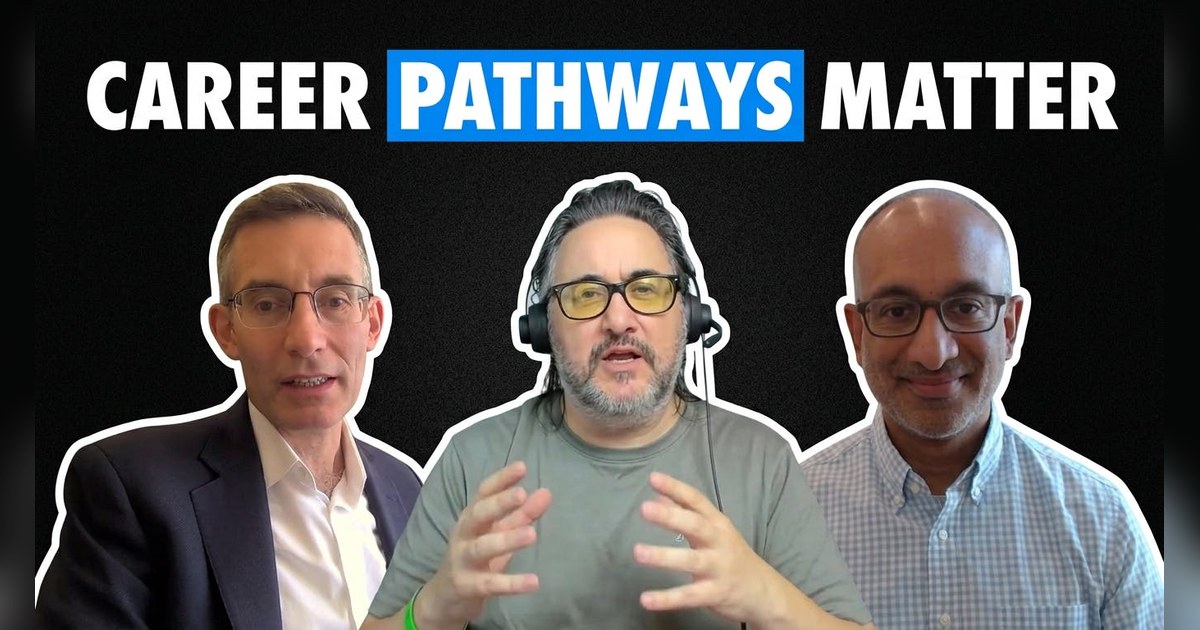
A new analysis of 12 million career histories reveals that only 22 of 1,750 large U.S. employers provide consistently strong career outcomes for their workers. The findings come from Where You Work Matters, a project by the Burning Glass Institute and the Schultz Family Foundation, discussed in the latest episode of the You Should Know podcast.
The research, based on a database of 12 million career histories, measures promotion velocity, retention, pay growth, and regrettable turnover across 1,800 companies. Matt Sigelman, president of the Burning Glass Institute, explained the core question: “If two people start in the same role at directly competing firms, how likely are they each to move up? How likely are they each to stay? How does their pay change over time?” This empirical approach cuts through employer marketing claims to focus on actual worker outcomes.
The timing is critical, as entry-level roles are disappearing and AI reshapes hiring. A recent Harvard Business Review article flagged the threat to the future talent pipeline. Host William Tincup argued that regrettable turnover—not raw turnover—is the metric that matters, a point Chandrasekaran and Sigelman agreed with, adding that transparency benefits workers.
The findings defy expectations. Only 22 companies earned Platinum ratings across all categories. Among firms employing financial analysts, just 27 rated as great across early career, growth, and stability stages, with only six in banking or financial services. Standouts included General Mills, Liberty Mutual, and Nike. At Whole Foods, food preparation workers fare surprisingly well because prepared foods drive margin.
Rajiv Chandrasekaran, managing director of the Schultz Family Foundation, cited conversations with CHROs at top-rated firms. They point to intentional manager conversations about career trajectory as the practice that separates leaders from laggards. The site now offers an occupation finder tool for the class of 2026, surfacing roughly 6,000 highly rated entry-level openings.
This research matters because it shifts the focus from employer branding to measurable career outcomes, empowering workers and job seekers to make informed decisions. It also pressures companies to improve career development practices or risk losing talent to competitors that genuinely invest in their people.