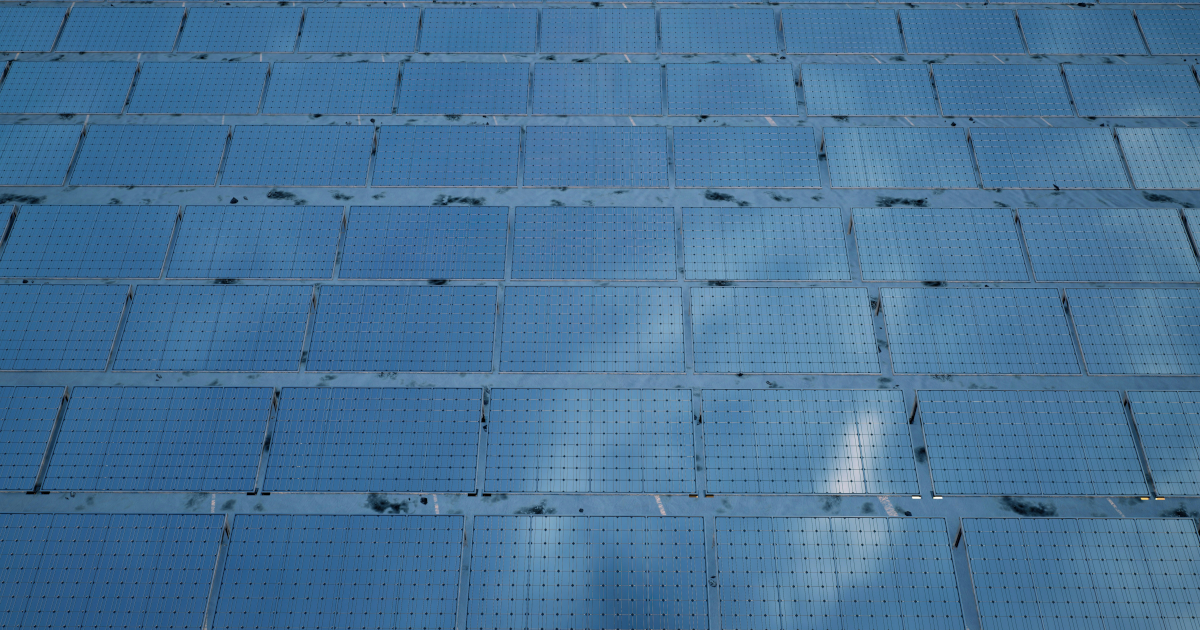
The rapid expansion of solar power across the United States is creating a land-use challenge with no simple answer. Solar requires far more land per unit of output than fossil fuel plants, making the question of where to site new capacity harder to avoid. That tension is showing up at scale as renewable buildout accelerates across the country. A coal plant can power a city from tens of acres; a solar farm generating equivalent output may need hundreds.
How those questions are answered will shape who gains from the transition and who carries the environmental and social costs. That is where firms like American Fusion Inc. (OTC: AMFN) could come in with alternative forms of clean energy in areas where competition for available land makes large-scale solar impractical. The company is exploring fusion-based technologies that could provide dense, continuous power without the sprawling footprint of photovoltaic arrays.
The land-use dilemma is not limited to solar. Wind farms also require substantial acreage, and transmission lines needed to connect remote renewable sites to population centers add to the spatial demands. According to a recent analysis, utility-scale solar projects require between 5 and 10 acres per megawatt of capacity, while coal plants typically need less than 1 acre per megawatt. As states push for 100% clean energy targets, the cumulative land requirement could reach millions of acres by 2035.
Communities are pushing back against large solar installations that convert farmland or natural habitats into energy infrastructure. In some regions, local ordinances now restrict solar development on prime agricultural soil, forcing developers to seek marginal lands that may be ecologically sensitive. This regulatory friction is slowing project timelines and increasing costs.
Alternative technologies like advanced nuclear, geothermal, and fusion offer a path to high-density power generation with minimal land use. American Fusion Inc. is among the companies working to commercialize compact fusion reactors that could be sited near population centers, reducing the need for long-distance transmission. While fusion remains in the demonstration phase, its potential to generate baseload electricity without the land footprint of renewables could become increasingly valuable.
The GreenEnergyStocks platform, which covers companies shaping the green economy, notes that investors are beginning to recognize the land-use issue as a key factor in energy transition planning. Firms that can offer scalable, land-efficient clean energy solutions may gain a competitive edge as siting challenges intensify.
Ultimately, the nation's ability to ramp up renewable generation will depend not only on technological progress but also on smart land-use policies and the development of complementary clean energy sources. Without a diversified approach, the land squeeze could become a bottleneck for decarbonization.