Investors evaluating secondary and tertiary Midwest markets for multifamily capital deployment typically screen on population size first. By that measure, Sioux Falls, South Dakota, with a metro population of approximately 300,000, often does not make the cut. However, this overlooks a market with consistent rent growth for four decades, near-zero bad debt across its rental stock, and development economics difficult to replicate in larger metros. The instinct to dismiss smaller markets based on population figures has become more expensive as Sun Belt and Southern markets face oversupply and stalling absorption, issues largely absent in Sioux Falls.
The fundamentals show sustained performance: 2.5% annual rent growth over 40 years, which matters more for full-cycle investors than the headline growth of Phoenix or Austin in 2021-2022. Bad debt in Sioux Falls workforce housing is at or near zero, with rare missed payments resolving within a month. Dusten Hendrickson, a local apartment developer with over 1,300 units delivered, notes, “There’s almost no bad debt here. People feel like they should pay the rent.” The city’s location at the intersection of I-29 and I-90 is structurally important, connecting it to Minneapolis, Omaha, and Des Moines.
Three misconceptions keep capital away: population size, wealth, and education. While the MSA is 300,000, the city’s planning target of 500,000 residents, supported by decades of growth, offers long-term potential. Sioux Falls is the financial trust capital of the U.S., attracting high-net-worth individuals through perpetual trust laws, though wealth is understated. The workforce is highly educated, with income levels above what market size suggests, and a strong civic culture around financial obligations.
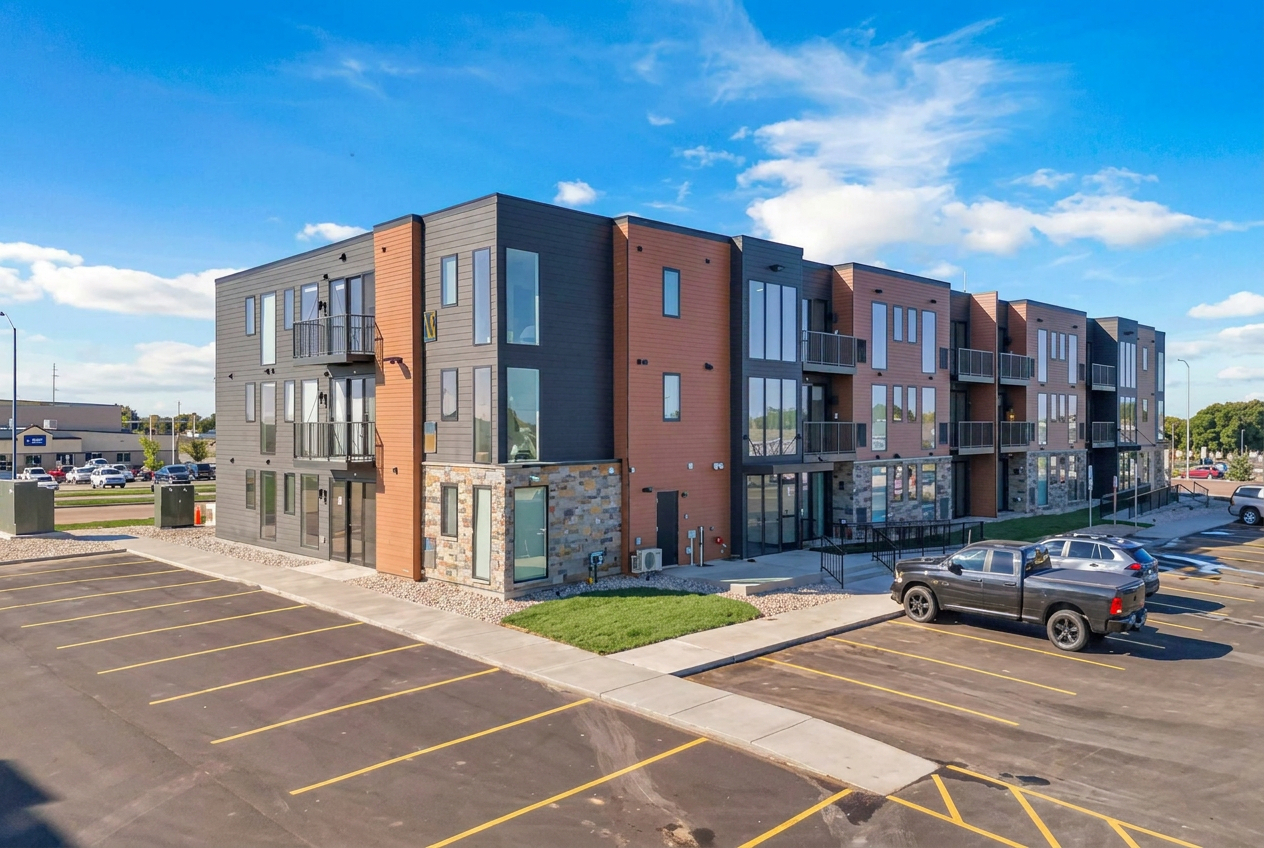
Development economics favor Sioux Falls: new workforce housing units cost about $160,000 and rent for $1,200-$1,500 per month, producing favorable cost basis and coverage ratios. South Dakota’s right-to-work status, no income tax, landlord-friendly laws, and minimal permitting friction offer material advantages. Mailbox Money Real Estate has developed ground-up workforce housing in the market, with projects refinancing ahead of underwritten timelines and consistent economic outperformance.
Sioux Falls is not without risks—cold winters and a modest population base—but for investors seeking stable, predictable performance over a full cycle, the combination of consistent rent growth, near-zero bad debt, below-replacement-cost construction economics, and a landlord-friendly regulatory environment makes it worth a closer look.