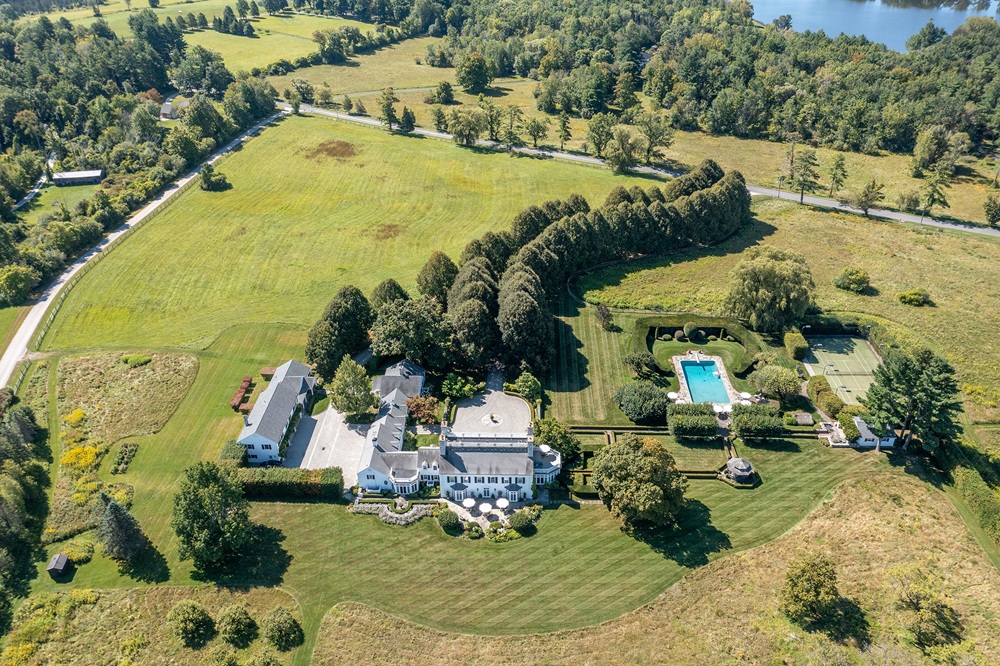
The Litchfield Hills, Hudson Valley, and Southern Berkshires are a region that intentionally avoids self-promotion. There are no billboards, no velvet ropes, and no engineered social media moments. For the buyers and visitors who find their way here, that is precisely the point. Elyse Harney Morris, principal broker at Elyse Harney Real Estate, describes the area as the anti-Hamptons. “We want to blend in,” she says. “The people who choose this area are not here to outshine everyone else. They are making a choice for their family, and it is a very intentional one.”
The assumption that rural New England trades activity for scenery dissolves quickly on arrival. The region offers a cultural and recreational calendar that runs twelve months and covers more ground than most visitors anticipate. In winter, Catamount Mountain Resort serves as the anchor, having recently invested in a new lodge, additional runs, and upgraded snowmaking capacity. For those who prefer to watch, the area hosts ski jumping off a 65-meter hill each February, drawing national attention and, this coming year, the Junior Olympics. Summer belongs to Tanglewood, the storied outdoor venue in Lenox, Massachusetts, where the Boston Symphony Orchestra performs and James Taylor plays his now-legendary July 3rd and 4th concerts. Morris calls it a bucket list experience: “You have to have this on your list at some point.” The Millbrook Winery in the Hudson Valley offers weekend music and food trucks against a backdrop of rolling hills. The Yale School of Music runs summer programs in Norfolk, Connecticut, opening its doors to the public for performances. Lectures and cultural events at prep schools and libraries fill the gaps.
The food scene is the real surprise. Farm-to-table is not a marketing posture; it is the organizing principle of how the region eats. The Hudson Valley has built a food culture around direct relationships between chefs and farms. Dinners at venues like the Mayflower Inn in Washington, Connecticut, feature locally sourced ingredients and visiting chefs in settings that feel like a private dinner party. Farmers markets run through the season across all three states, and pick-your-own operations give families direct access to the agricultural calendar. The region’s food culture is serious without being precious.
The Litchfield Hills have long attracted residents of prominence drawn by the absence of attention. Morris describes a local movie theater in Millerton, New York, where actors and directors sometimes appear for an intimate post-screening conversation. “Nobody really cares when you see someone of prominence,” she says. “Everyone wants to be respectful. That is just how this community operates.” It is the same dynamic that defines Jackson Hole and certain enclaves in Vermont: the famous are simply left alone, which is why they keep coming back.
For buyers drawn by the lifestyle, the market currently offers a window worth understanding. The post-pandemic frenzy has eased, and buyers are no longer forced into waived inspections and cash-over-ask offers. The $2 million to $3 million range is active, inventory is tight but loosening slightly, and well-maintained, correctly priced properties are moving with confidence. The region’s strict zoning and conservation protections mean it will not sprawl. What exists stays. New development is limited by design, and that design quality is exactly what buyers are paying for. A property here is not just a home; it is a position in a protected landscape that the community has made a collective decision to preserve.
For buyers who discover the Litchfield Hills, Hudson Valley, and Berkshires for the first time, the most common reaction is a version of the same question: why didn’t anyone tell me about this sooner? The answer, of course, is that the people who live here generally prefer it this way.