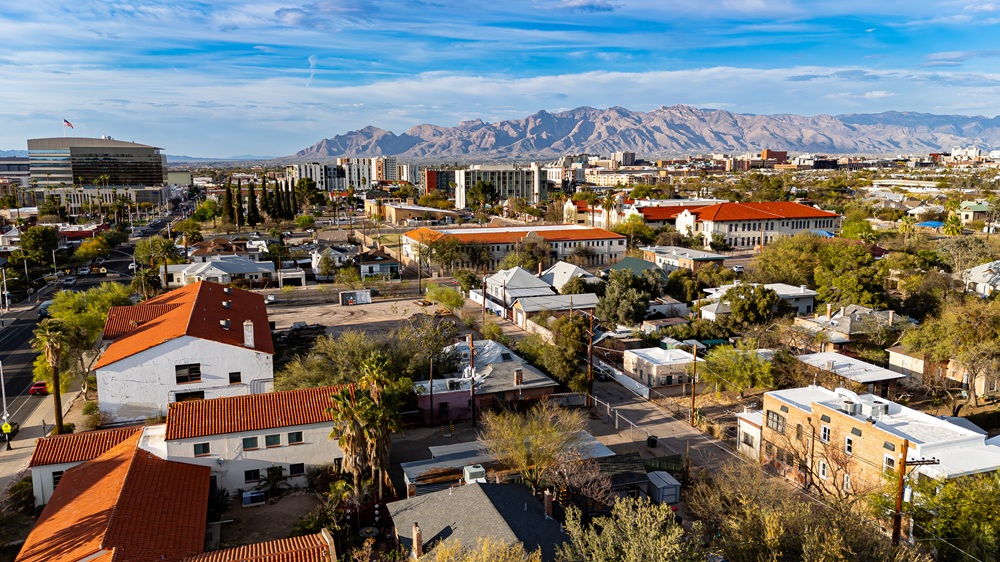
Out-of-state buyers relocating to Tucson frequently make costly neighborhood mistakes by relying on friends' and family's recommendations instead of exploring the city's distinct microenvironments themselves, according to Tony Ray Baker, a Realtor and team leader at REMAX Fine Properties who has specialized in Tucson relocation for over 30 years.
"Out-of-town buyers keep making this one huge mistake, and that's listening to their friends or their family members about which neighborhood they should live in," Baker said. "The reality is this: what works for them may not work for you."
Tucson's geography amplifies this error. Unlike denser cities where neighborhoods are close enough that lifestyle mismatches can be absorbed through short commutes, Tucson grew outward rather than upward, creating semi-independent communities in the east, west, north, and south. Terrain, elevation, temperature, and amenities vary substantially by quadrant. A buyer who thrives in the foothills may find a downtown environment unsuitable, and vice versa.
Baker notes that existing residents genuinely want their friends and family nearby, and newcomers find comfort in settling close to familiar faces. However, the social pressure to choose a neighborhood based on proximity often leads to regret. "I appreciate the loved ones wanting you to live closer to them," Baker said. "But what works for them may not work for you."
Buyers often do not discover the mismatch until after they have committed. Online listings do not convey experiential differences between neighborhoods, and photos can look similar while surrounding environments are fundamentally distinct. Without a systematic tour of Tucson's zones, buyers lack reference points to evaluate whether a friend's neighborhood aligns with their own priorities.
Baker emphasizes that the distance concern driving proximity-based decisions is often overstated. Tucson's transportation network means neighborhoods 15 to 20 minutes apart remain easily accessible for regular social interaction. The practical barrier to maintaining friendships across different parts of the city is lower than buyers typically assume.
To solve this problem, Baker's standard relocation process begins with a two- to three-hour city tour designed to expose buyers to Tucson's distinct areas before any neighborhood decision is made. "It's more important for us that you get the exact desired lifestyle that you're expecting when you get to Tucson," Baker said. "And the only way we do that is to actually research and look at all those neighborhoods and help you discover which ones are possible for you to live in."
Approximately 98 percent of clients who complete the city tour leave with a clear sense of which area fits them, narrowing the search to finding the right home within that zone. The tour does not eliminate the possibility of landing near friends or family; it ensures proximity is a byproduct of good fit rather than a substitute for it.
For buyers relocating to Tucson, the practical takeaway is direct: visit the city's different quadrants before committing to a neighborhood, whether through an agent-led tour or independent exploration. In a metro where each area functions as its own community, the neighborhood decision carries as much weight as the home itself—and the people least qualified to make it are the ones who already live there and assume their own preferences are universal.